Your Cart is Empty

shop


CBD Essentials
CBD + Terpenes
CBD + Terpenes


Soothe Salve +
Serenity Salve +
Synergy Salve +
CBD Essentials


Soothe Salve
Serenity Salve
Synergy Salve
Are you 18+?
CBD for Hand and Wrist Arthritis: A Science-Based Guide
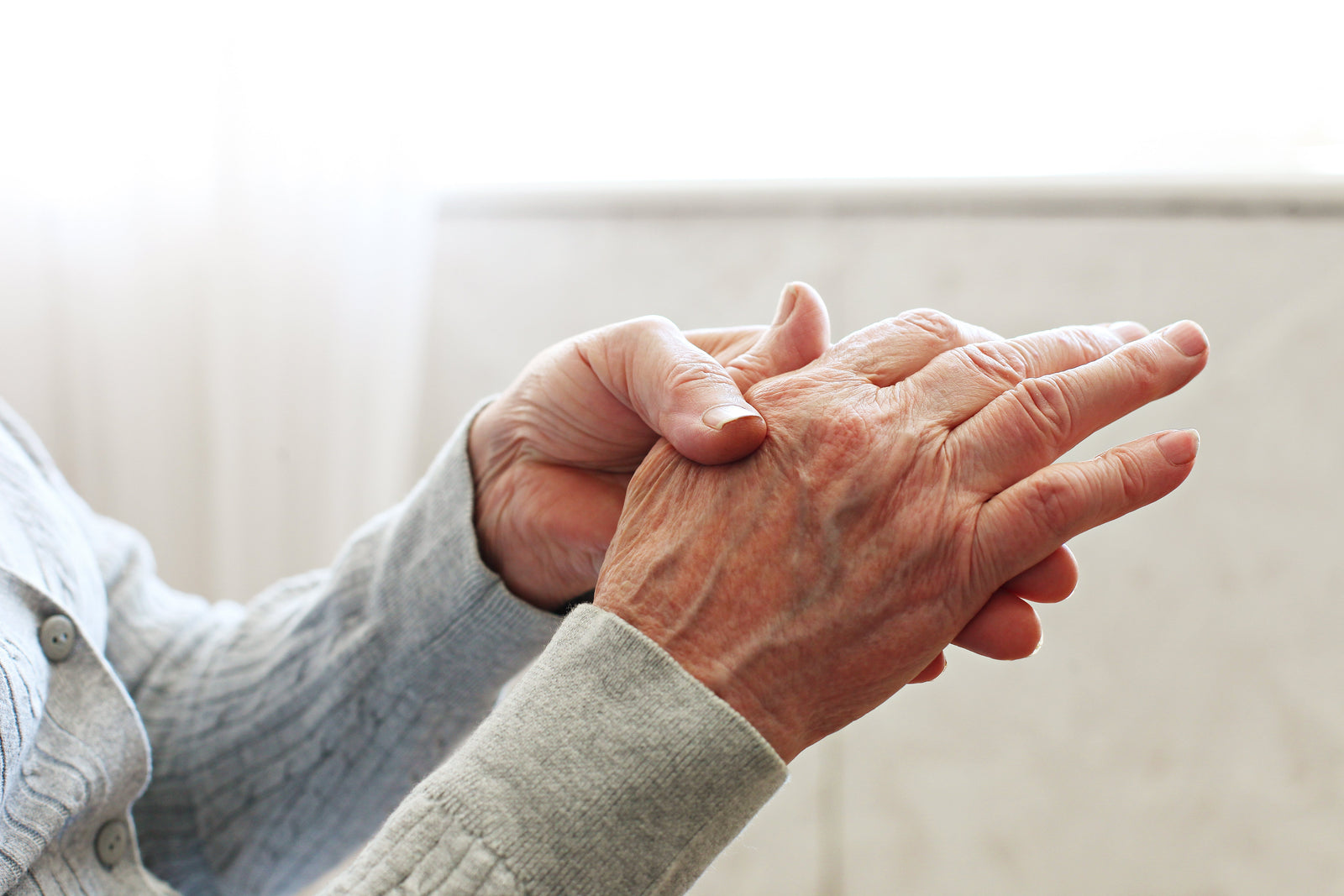

Hand and wrist arthritis is one of the most common and functionally debilitating forms of joint disease, affecting an estimated 40% of adults over age 60. The hands contain 27 bones, over 25 joints, and more than 30 muscles and tendons — making them among the most intricate and mechanically demanding structures in the human body. When arthritis strikes these joints, even basic tasks like gripping a coffee mug, turning a doorknob, typing, or buttoning a shirt can become sources of significant pain.
While conventional treatments range from splinting and NSAIDs to corticosteroid injections and joint replacement surgery, a growing body of peer-reviewed research has examined topical cannabidiol (CBD) specifically for hand and wrist arthritis — and the results are increasingly encouraging. In this guide, we explore the science behind hand arthritis, the clinical evidence for CBD, and how Entourus full-spectrum CBD salves deliver targeted relief to these critical joints.
Understanding Hand and Wrist Arthritis
Arthritis of the hand and wrist most commonly presents as osteoarthritis (OA) or rheumatoid arthritis (RA), each with distinct pathological mechanisms.
The thumb carpometacarpal (CMC) joint is the most commonly affected hand joint in OA, with prevalence rates reaching 66% in women over age 55. This joint is particularly vulnerable because it endures significant compressive forces during pinch and grip activities — forces that can reach 12 times the amount of force applied at the fingertips.
In both OA and RA, inflammatory cytokines play a central role in joint destruction and pain. TNF-α, IL-1β, and IL-6 drive cartilage degradation, synovial inflammation, and the sensitization of pain-transmitting nerve fibers within the joint capsule. This inflammatory environment is precisely where CBD’s mechanisms of action become therapeutically relevant.
The Clinical Evidence: CBD for Hand and Wrist Arthritis
Hand arthritis is one of the best-studied conditions for topical CBD, with multiple peer-reviewed clinical trials providing direct evidence:
A 2024 open-label feasibility trial published in Scientific Reports examined transdermal CBD gel (4% w/w) applied three times daily for four weeks in patients with hand osteoarthritis. The results were striking: participants experienced statistically significant reductions in current pain, average pain, and maximum pain from baseline. Additionally, the study documented a significant increase in grip strength in the treated hand, along with significant improvements in fatigue, stiffness, and anxiety scores.
A randomized controlled trial published in the Journal of Hand Surgery evaluated topical CBD for the treatment of thumb basal joint (CMC) arthritis and found significant improvements in both pain and disability scores without any adverse events. This is particularly noteworthy because thumb CMC arthritis is one of the most functionally limiting forms of hand OA.
Furthermore, an exploratory cross-sectional study in the Journal of Cannabis Research reported a 44% average reduction in pain among arthritis patients using CBD, with the osteoarthritis cohort showing the greatest improvement of any arthritis subtype studied.
In a promising development, preliminary results from a 2026 trial presented at the American Association for Hand Surgery comparing topical CBD to topical diclofenac for hand osteoarthritis indicated that CBD led to greater functional gains both compared to baseline and following NSAID use — suggesting that topical CBD may be as effective as or superior to conventional topical anti-inflammatory drugs for this condition.
Why Topical CBD Is Ideal for Hand and Wrist Arthritis
The anatomy of the hand makes it an ideal target for topical CBD therapy. The joints of the fingers and wrist are extremely superficial — lying immediately beneath the skin with minimal intervening soft tissue. This means topical CBD can be delivered directly to the affected joint capsule, synovial membrane, and surrounding nerve endings with minimal distance to travel through the skin.
Additionally, the hands have a high density of CB1 and CB2 receptors in the skin and subcutaneous tissue, providing abundant receptor targets for transdermal CBD. The thin skin of the hands and fingers also facilitates absorption compared to thicker skin regions like the back or thighs.