Your Cart is Empty

shop


CBD Essentials
CBD + Terpenes
CBD + Terpenes


Soothe Salve +
Serenity Salve +
Synergy Salve +
CBD Essentials


Soothe Salve
Serenity Salve
Synergy Salve
Are you 18+?
What Should I Look for in a CBD Topical?
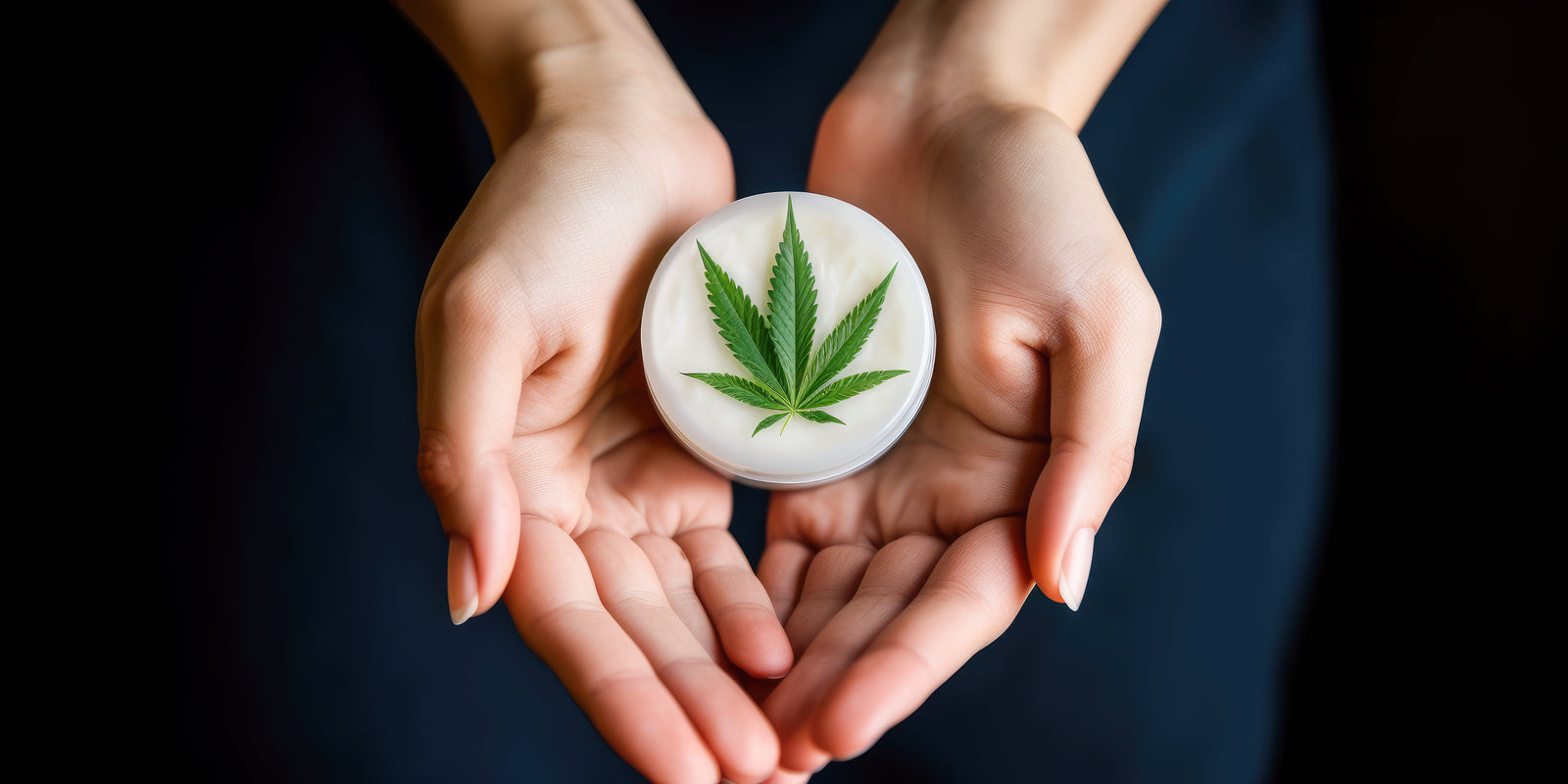

The CBD category has got crowded. Brightfield Group put US retail sales of hemp-derived CBD at roughly $5 billion in 2022 — which is a lot of sales, and a lot of products to choose between. If you feel overwhelmed by the options, that is a reasonable response. Even within a single category, topicals range enormously in quality, strength, formulation and ingredients.
Here is how to narrow it down.
Start With Your Goal
The first thing to settle is what you actually want the product for. A post-workout routine, a spot that stiffens up, dry skin, or simply something to do at the end of a long day are all different problems, and they point at different formats.
That choice comes first because it decides the category before it decides the brand — whether you want something you swallow, something you inhale, or something you put on the skin. Narrowing down the why is what makes the rest of the decision tractable, and it is where our guide to choosing the best CBD cream picks up.
Quality
Look past the packaging and past any claim that sounds too good to be true. A well-made topical has nothing to hide, and most of what matters is legible on the label:
- Full-spectrum, not broad-spectrum or isolate. Full-spectrum extract carries the minor cannabinoids, terpenes and flavonoids that came with the plant, rather than cannabidiol on its own.
- Terpenes included. The “entourage effect” — a term coined in 1998 for the observation that cannabinoid activity can be altered by related compounds that do little on their own — is the reason full-spectrum formulations exist at all. What are terpenes? They are the aromatic compounds that give different strains of cannabis and hemp their distinctive scents and flavours.
- Extract from vertically integrated farms. Vertical integration is common at larger cannabis companies but still relatively rare in hemp and CBD. It means one company oversees production from seed to sale, which is what keeps plant genetics and extract quality consistent from batch to batch.
- Independently lab tested. The single most useful thing to look for is a certificate of analysis (COA), showing the product has been through in-house and third-party testing. A COA tells you whether the base biomass is free of pesticides, mould and heavy metals, and how closely the tested product matches the CBD figure printed on the label.
Strength
Plenty of buyers go straight to strength, but it is worth being clear about what the word means. The obvious measure is the amount of CBD — check the COA for concentration by weight, or work out the milligrams per millilitre.
That number on its own does not tell you the whole story, though. Whether the CBD sits in a full-spectrum formula alongside other cannabinoids and terpenes, and whether the product has been infused with additional terpenes, both change what you are actually buying. Two jars with the same milligram figure are not necessarily the same product. Our own run 1000, 1500 and 2000 MG per 50 ML jar across two lines, which is the comparison that matters more than the headline number.
Formulation
The non-CBD ingredients matter as much as the CBD, because different formulas behave differently on the skin.
A cream or lotion with waxy ceramides, for example, has an immediate moisturising effect: ceramides are lipids, and they make up roughly half of the epidermis, the body’s outer barrier. A thicker salve or balm is built around oils and waxes instead of water, which is the more natural carrier for fat-soluble compounds like cannabinoids and terpenes — and the skin itself is densely supplied with cannabinoid receptors.
That is the real difference between creams, lotions, salves and ointments — terms used more or less interchangeably in conversation, but which describe different ratios of water, oils and waxes.
It is also why ointments, balms and salves carry a medicinal connotation that lotions and creams do not. The etymology is unusually direct about it: salve descends from a Proto-Indo-European root meaning “fat, butter”; ointment comes from the Latin unguere, “to anoint or smear with ointment”; and balm traces back through Greek to the Semitic basam, “spice.” Three unrelated roots, all of them describing something oily or aromatic rubbed into the body.
Ingredients
Beyond quality, strength and formulation, the individual ingredients are worth reading. Where and how the hemp was grown matters, and so do the oils, waxes, fragrances and binders that make up the rest of the jar.
Many CBD topicals include menthol or camphor. There is nothing inherently wrong with that, and the pharmacology is real — both act on the TRP channels involved in sensing temperature and irritation. The clinical evidence is thinner than their ubiquity suggests, though: a 2023 survey of the published literature found only fifteen clinically relevant studies of topical camphor-and-menthol products across twelve years — two of them randomised controlled trials — and concluded that no definitive recommendation could be made either way.
What menthol reliably does is produce a strong, immediate cooling sensation, which is easy to read as evidence that a product is working. We leave it out for a plainer reason: the aroma follows you around, and it can irritate the eyes. Our clean topical standards rule out menthol, beeswax and synthetic fillers, which is a useful checklist to hold other products against.
Where to Start
Reading labels only gets you so far. At some point you have to put something on your skin and see how you get on with it — which is the argument for starting small rather than committing to a full jar.
The CBD Salve Sample Bundle is the $25 way to try the strengths side by side, and the full range is there once you know what suits you.
Every Entourus salve uses full-spectrum CBD from non-GMO hemp grown in Central Oregon. Our CBD + Terpenes line adds a proprietary blend of more than fifty botanically derived terpenes, including limonene and humulene. Both lines come in 1000, 1500 and 2000 MG per 50 ML jar.
Learn more about cannabis topicals on our FAQ.
Mentioned in this guide
The CBD Salve Sample Bundle is the $25 way to try the three strengths side by side — the lowest-risk way to answer the question this article asks, which is what suits you rather than what suits anyone.