Your Cart is Empty

shop


CBD Essentials
CBD + Terpenes
CBD + Terpenes


Soothe Salve +
Serenity Salve +
Synergy Salve +
CBD Essentials


Soothe Salve
Serenity Salve
Synergy Salve
Are you 18+?
How to Choose the Best CBD Cream
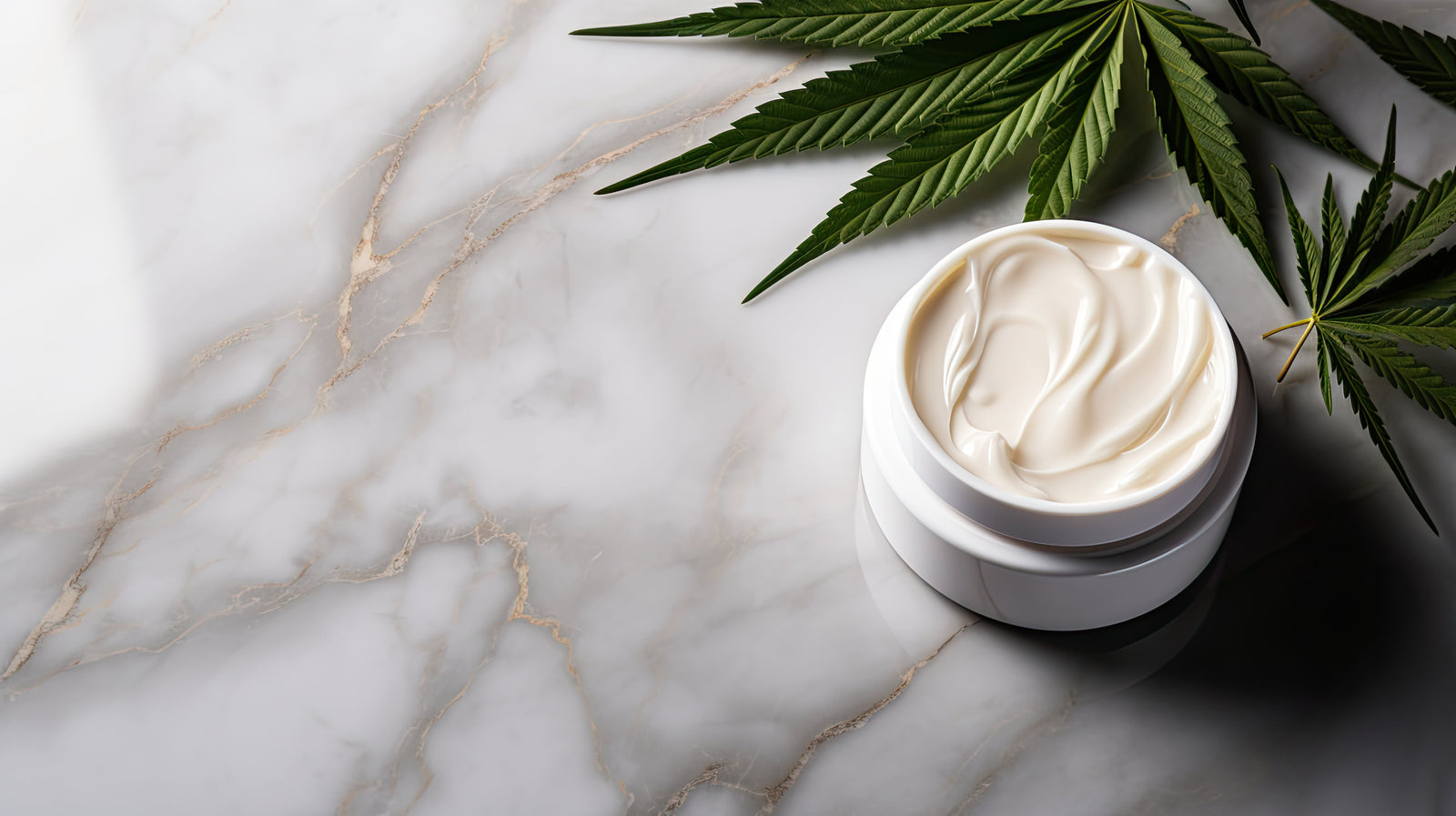

Did you know the best cannabidiol (CBD) cream for you might actually be a salve, lotion or ointment? Although these terms are often used interchangeably, they actually refer to distinctly different formulations. While you might initially search for CBD creams by default, that may not always be the best type of topical to fit your unique needs. We’ll break down the differences between these CBD topicals, so you can find the best cream, salve, lotion or ointment for applications like workout recovery, skincare or easing discomfort.
What Is the Difference Between Creams, Salves, Lotions and Ointments?
Skincare and wellness ingredients come with a lot of terminology that can feel confusing if you aren’t familiar with the ways these different products function and feel on your skin. But once you know how creams, salves, lotions and ointments work, it’s that much easier to find the best product for your specific needs. Here’s an in-depth definition of each category:
-
Lotions
Lotions are a moisturizing emulsion of water, oils and waxes, and they may also contain alcohols and glycerin. Lotions typically have a thin, runny consistency, thanks to a higher ratio of water to oils. They are easy to spread on the skin, quickly absorbed and good for everyday use. Some lotions are also formulated without any oil, which can be a preferable choice for those with sensitive skin prone to breakouts. -
Creams
Creams are a thicker, spreadable blend of water and oils that often includes other ingredients like alcohols and waxes to prevent the emulsion from separating. Creams have a higher oil content and lower water content compared to lotions, providing a more intense level of moisturization, making them good for very dry skin or during colder, drier seasons. -
Salves
Salves are a type of topical typically used to moisturize, soothe, protect or heal the skin, while also delivering key active ingredients. They consist of a semi-solid mixture of natural ingredients like oils, waxes and medicinal herbs or plant extracts that are typically soft to the touch. Salves are designed to seal the skin's surface for an extended period, even as the active ingredients are rapidly absorbed and penetrate deep into the epidermis. -
Balms
Balms and salves are terms that are often used interchangeably and for good reason. Balms are also semi-solid mixtures of oils, waxes and botanicals. In fact, the word “balm” comes from the Hebrew word for spice, referring to the pleasant aroma of the herbal and botanical ingredients often included in them. Balms are designed to sit on and seal the skin’s surface, but typically contain even less water or other fluid ingredients than salves—think of the relatively solid, yet spreadable consistency of your favorite lip balm. -
Ointments
Ointments are also similar to salves and balms in that they are thick, semi-solid formulations of oil-based substances. They are designed to create a protective barrier on the skin and are known for long-lasting effects and slow absorption rates. The main difference between salves and ointments is that ointments are often made with a petroleum jelly-like base material.
The more oil or wax a skincare product has, the more occlusive it tends to be—meaning it stops moisture from evaporating out of the skin by supporting the skin’s natural barrier and providing an additional layer on top of it. It’s good to note that the more occlusive a product is, the more likely it is to trap excess oil on the skin, which can lead to clogged pores and pimples. This is why highly occlusive products are more frequently used on areas of the body not prone to breakouts.
On the other hand, the more water a skincare product has, the more spreadable and absorptive it is and less likely it is to trap excess oils. This is why lotions and creams tend to be so popular for face and body applications.
Should I Look for a CBD Cream or a CBD Salve?
When you’re shopping for most skincare products, the choice between creams, lotions, salves and ointments usually comes down to a few key considerations. Where do you plan to apply it on your body? How dry is your skin in that area? And how do you like a product to feel when you apply it in that area?
But CBD-infused skincare products are a little different, because of how CBD and other cannabinoids interact with your skin and the endocannabinoid receptors just under the surface.
CBD and THC are lipid soluble—they dissolve in fats and oils rather than in water. This means that oil-based CBD formulations typically carry the active ingredients into the skin more readily. Your epidermis lovesoils, fats and waxes. That’s why so many topical products are formulated as ointments or salves rather than lotions, creams or balms. Ointments and salves are able to sink into the many layers that make up your skin.
What that means in practice is that an oil-based salve or ointment is generally better suited to carrying CBD into the skin than a water-heavy lotion or cream. So if you’re looking for a CBD topical for one specific area—shoulders after a workout, say, or hands at the end of a long day—a salve or ointment is usually the sensible starting point. If you want a fuller checklist, we’ve written separately about what to look for in a CBD topical.
How Do CBD Creams and Salves Interact With the Endocannabinoid System?
Your skin is the body’s largest organ, and it connects to many of the other major systems in your body, like the circulatory and nervous systems. Your skin also connects to your endocannabinoid system—a widespread network of receptors throughout the body that respond to cannabinoid compounds like CBD.
When you smoke, eat or apply cannabinoids topically, active compounds like CBD and THC influence your digestive, lymphatic, endocrine and other systems via the endocannabinoid system. This is also true for terpenes, which can be absorbed and act upon endocannabinoid receptors.
Why the Best CBD Creams and Salves Include Terpenes
Terpenes are the chemical compounds behind the familiar scents, flavors and effects of essential oils in plants like citrus fruits, hops, herbs and, yes, cannabis. Terpenes play a wide variety of roles for the plants in which they naturally occur, like repelling pests or attracting animals and humans that might spread their seeds. In the human body, however, terpenes can also produce unique effects, like the relaxing qualities of lavender.
When terpenes and cannabinoids are consumed together, the individual effects of each chemical compound can combine into what is called the entourage effect. The entourage effect essentially means that a formula containing, say, CBD and linalool—a terpene found in plants like lavender, basil and cannabis—may do more together than either ingredient would on its own.
That’s why the best CBD creams and salves not only include full-spectrum CBD, but also the natural terpenes found in hemp and cannabis. In our two CBD salve product lines, we incorporate terpenes in both essential oil and isolated form. Our CBD + Terpenes salves pair full-spectrum hemp extract with a proprietary blend of more than fifty botanically derived terpenes, developed over years of formulation research. For a closer look at how the two lines differ, see what’s inside CBD Essentials and CBD + Terpenes.
Does the Base Oil in a CBD Cream or Salve Matter?
Creams and salves are defined by their different proportions of oil, water and other emulsifiers, but the specific types of oils or waxes that are used also make a big impact. Many CBD creams, balms and salves are made with beeswax, which is a popular emulsifying agent across skincare products and cosmetics.
However, we opted to make our CBD salves with candelilla wax, a vegan alternative to the more common use of beeswax in topicals. Candelilla is a naturally non-comedogenic emulsifier, meaning it helps hold oil and water-based ingredients together. Candelilla wax nanoemulsions have also been studied as a way of encapsulating and delivering plant-derived bioactive compounds. And the endocannabinoid system is itself one of the body’s endogenous lipid signalling pathways—part of why the carrier a formula is built on matters as much as the active ingredient in it.
What a formula leaves out matters too. Our clean topical standards rule out menthol, beeswax and synthetic fillers, so what reaches the skin is the CBD and the terpene blend rather than a counterirritant.
So how do you choose the best CBD cream? First, recognize that it may not actually be a cream. Second, look for quality full-spectrum CBD that includes terpenes and other beneficial cannabinoid compounds. Last, but not least, check the label for carrier ingredients like oils, waxes and alcohols. The base of your CBD product could make a big difference in how well those terpenes and cannabinoids are carried—not to mention how the product absorbs into and feels on your skin.
Every Entourus salve uses full-spectrum CBD from non-GMO hemp grown in Central Oregon. Our CBD + Terpenes line adds a proprietary blend of more than fifty botanically derived terpenes, including limonene and humulene. Both lines come in 1000, 1500 and 2000 MG per 50 ML jar. If you would rather try before committing to a size, the CBD Salve Sample Bundle is the $25 way in, or you can browse all Entourus topicals.
Learn more about cannabis topicals on our FAQ.
Mentioned in this guide
The CBD Salve Sample Bundle is the $25 way to try the formats side by side before committing to a full 50 ML jar — useful when the honest answer to “cream or salve?” is that it depends on where you are putting it.