Your Cart is Empty

shop


CBD Essentials
CBD + Terpenes
CBD + Terpenes


Soothe Salve +
Serenity Salve +
Synergy Salve +
CBD Essentials


Soothe Salve
Serenity Salve
Synergy Salve
Are you 18+?
How to Choose the Best CBD for Running and Active Lifestyles
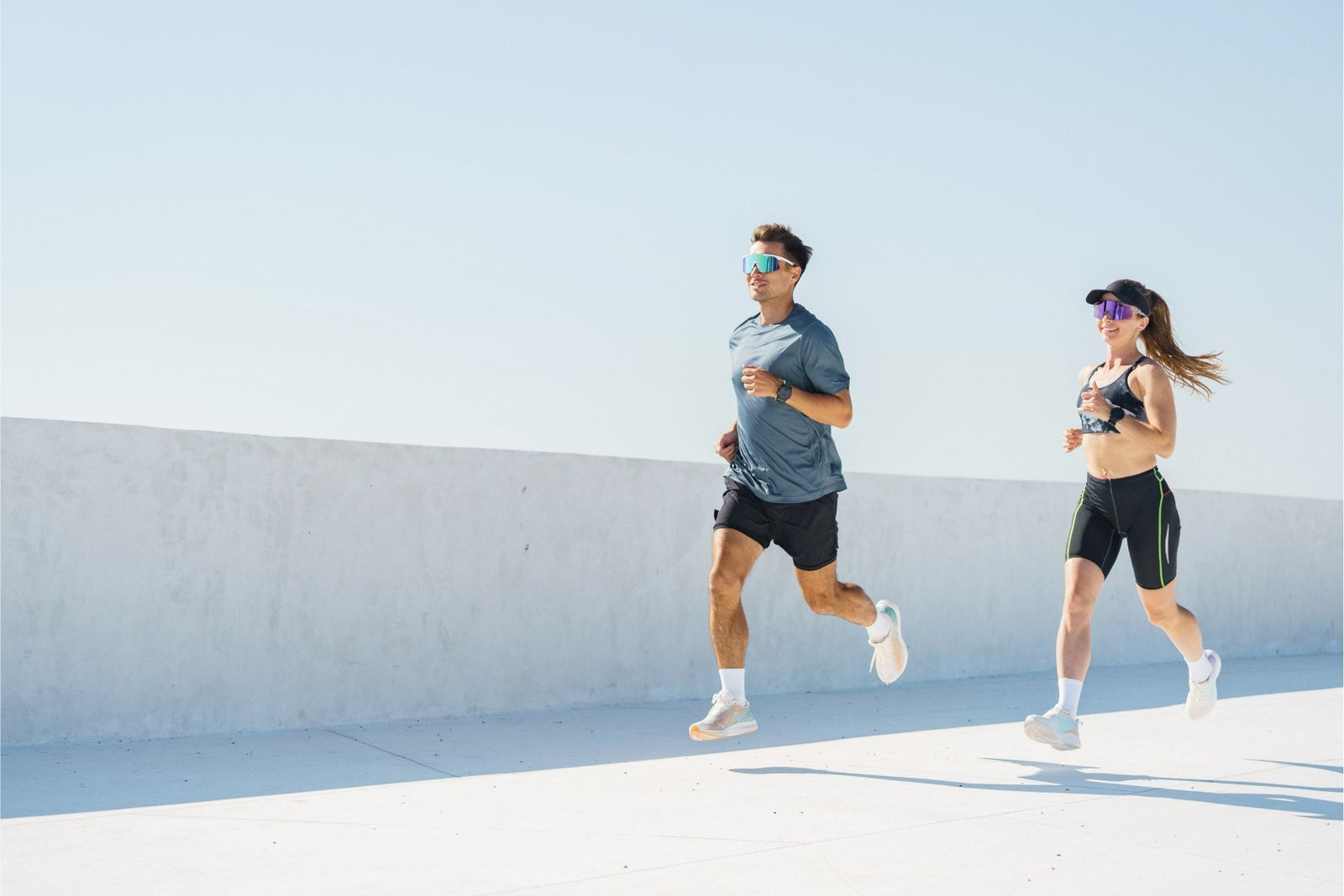

When you're constantly on the move, whether pounding the pavement or hitting the gym, your body needs proper care as much as it needs motivation. That’s where a good CBD salve comes in. Topicals have gained popularity among active people for one straightforward reason: they put what is in the jar exactly where you want it.
If you’re new to CBD or wondering how to integrate it into your wellness routine, this guide covers what you need to know—what salves are, what separates a good one from a poor one, and what the research does and doesn’t currently show.
What Are CBD Salves?
CBD salves are a topical infused with cannabidiol (CBD), a natural compound extracted from hemp. Unlike CBD tinctures, which are administered sublingually, or capsules, which are ingested, salves are applied directly to the skin and act locally on the area you choose. Entourus salves are built with active people in mind: the areas that take the load after a run are usually specific, and a topical lets you treat them that way.
One of the major differences between salves and other topicals like creams, lotions and ointments is the ratio of water, oils and waxes those formulas contain. That matters because CBD is lipid soluble—it dissolves in fats and oils rather than in water—so an oil-rich base is the more natural carrier for it. That is also why ointments, balms and salves carry a more medicinal connotation than lotions and creams. You can see it in the etymology—these terms come from ancient roots that evoke anointing with butter and medicinal spices.
Why Choose Entourus CBD Salves?
Entourus CBD salves differ from a standard CBD topical in three ways:
- USA sun-grown full-spectrum CBD: Extracted from Oregon-grown hemp, so the cannabinoids, terpenes and flavonoids of the plant are carried through rather than stripped out.
- Terpene-rich formulation: Our CBD + Terpenes line adds a proprietary blend of more than fifty botanically derived terpenes, including humulene and limonene.
- Tested and traceable: Premium extraction methods and carefully sourced ingredients, with third-party lab results you can pull up from the label.
What a CBD Salve Actually Offers Runners
Recovery matters as much as training. Here is where a salve fits into it.
1. Targeted rather than systemic
Runners tend to have specific complaints: calves, knees, hips, the arches of the feet. A topical is applied to those places and works locally, which is the practical difference between a salve and something you swallow. Skin is also densely supplied with the receptors of the endocannabinoid system, which is described in the research as involved in maintaining skin homeostasis and barrier function.
2. The full plant, not one isolated compound
Full-spectrum extract carries minor cannabinoids and terpenes alongside CBD. The idea that these compounds do more in combination than in isolation—the “entourage effect”—has been in the literature since 1998 and is the reason our formulation is built the way it is. CBD itself has been reviewed for antioxidative and anti-inflammatory properties, largely in laboratory work, and its use in sport is an active area of research.
3. A routine you will actually keep
The recovery habits that help are the ones people repeat. Rubbing a salve into your calves after a long run takes two minutes, needs no equipment, and slots in next to stretching and hydration rather than competing with them. That reliability is worth more than any single ingredient.
How to Choose the Right CBD Salve For Your Needs
Not all CBD salves are created equal, so it pays to compare before buying. Here are the factors worth weighing.
CBD Concentration
Check the product label to confirm the CBD milligram content and work out how much you get per application. There is no one-size-fits-all dose, but topicals containing 20 MG of CBD per ML or more are a reasonable reference point. Our jars run 1000, 1500 and 2000 MG per 50 ML — and for running specifically, legs are a large coverage area, which is why Synergy Body Oil + tends to suit them better than a salve.
Full Spectrum vs. Isolate
Think of full-spectrum CBD like whole grains—not stripped of the parts that came with it. Full-spectrum extract contains trace amounts of THC, at levels under the 0.3% by dry weight threshold that defines hemp under the Farm Bill, and far too low to produce an intoxicating effect.
Those trace compounds are what the entourage effect refers to: the terpenes, essential oils and minor cannabinoids present alongside CBD in a full-spectrum extract. CBD isolate, by definition, is distilled to remove everything but CBD, which takes the rest of the plant profile out of the equation.
Third-Party Testing
Make sure the product is tested by an accredited independent lab, with results you can actually access. That information lives on a COA (Certificate of Analysis), which a reputable company will always provide. It confirms the product is free from contaminants and contains the amount of CBD it claims. Every Entourus product is third-party lab tested, with results accessible by scanning the QR code on the label. We manufacture entirely in the USA and test throughout the supply chain.
Quality Ingredients
Look for skin-nourishing base ingredients like cold-pressed organic oils and organic waxes and butters—candelilla, mango, shea. A good base leaves skin hydrated rather than irritated. Our clean topical standards rule out menthol, beeswax and synthetic fillers, which is a useful checklist to hold other products against.
Scent and Skin Compatibility
Since salves are applied topically, choose one with a scent you like—or none at all—and check it suits your skin type. Opinions vary on what a topical should smell like, but there is one point of agreement: nobody wants to walk around smelling of menthol or arnica. Topicals that include menthol usually do so for a temporary cooling sensation, at the cost of an aroma that follows you around and can irritate the eyes. The aromas in our CBD Essentials and CBD + Terpenes lines are deliberately present but not overpowering.
Final Thoughts
A CBD salve or body oil is a sensible addition to a running routine: a targeted, plant-based topical you apply where you want it, in a format that fits alongside the rest of your cool-down. Our active recovery guide puts the sequence in order, and incorporating CBD salve into a wellness routine covers turning it into a habit rather than an occasional thing.
The same logic runs across activities—we have written separately about CBD and working out and about hiking and outdoor activities. Whichever you reach for, choose high-quality products from brands that publish their testing.
Every Entourus salve uses full-spectrum CBD from non-GMO hemp grown in Central Oregon. Our CBD + Terpenes line adds a proprietary blend of more than fifty botanically derived terpenes, including limonene and humulene. Both lines come in 1000, 1500 and 2000 MG per 50 ML jar.
Learn more about cannabis topicals on our FAQ.
Mentioned in this guide
Synergy Body Oil + is the 50 ML bottle in our CBD + Terpenes line — built for large coverage areas, which is what legs are after a long run. Full-spectrum hemp, fifty botanical terpenes, no menthol or beeswax.