Your Cart is Empty

shop


CBD Essentials
CBD + Terpenes
CBD + Terpenes


Soothe Salve +
Serenity Salve +
Synergy Salve +
CBD Essentials


Soothe Salve
Serenity Salve
Synergy Salve
Are you 18+?
The Many Benefits of Incorporating CBD Into Your Skincare Routine
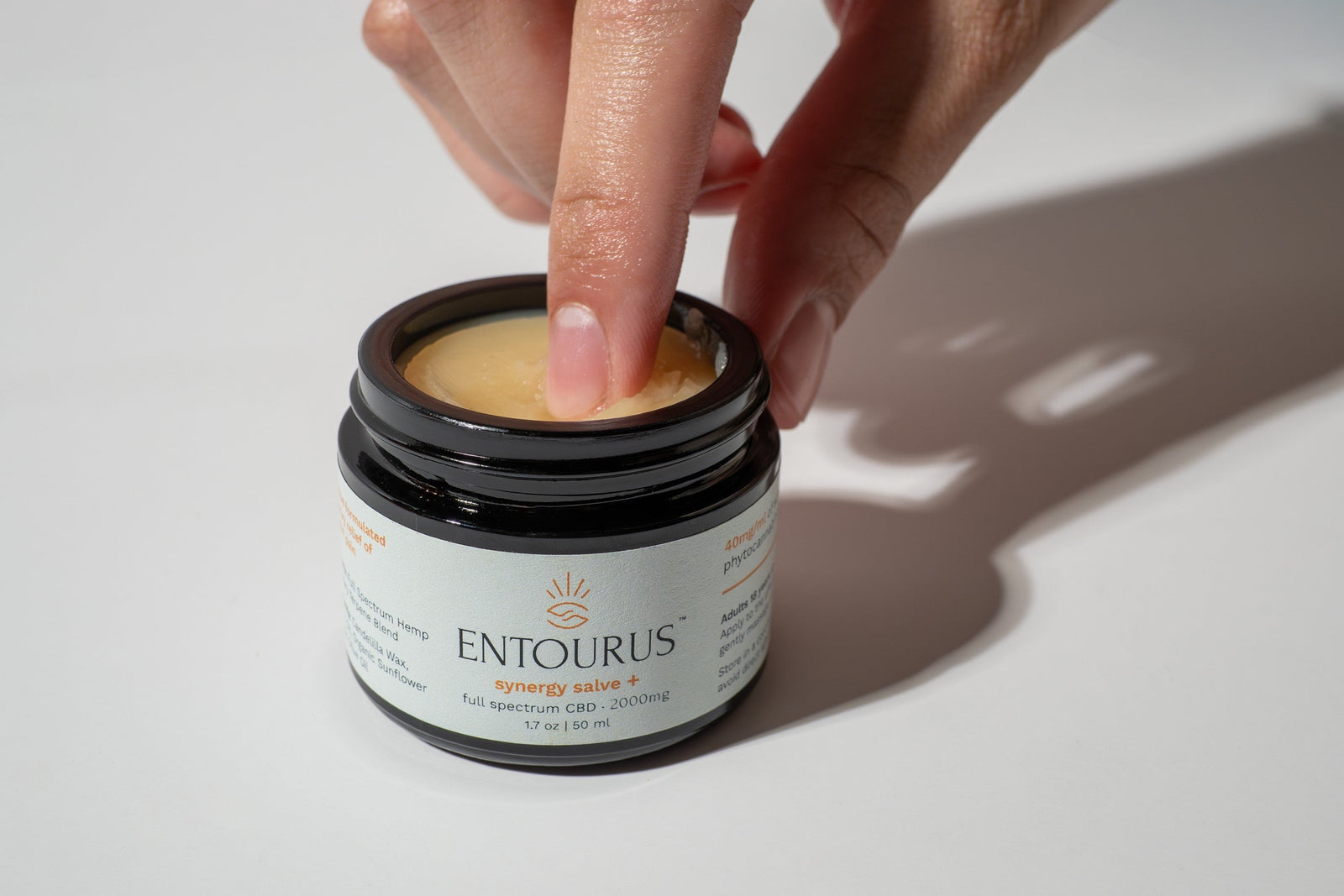

Whether you’re on the #CleanGirl end of the beauty spectrum or your nightly 7-step Korean skincare routine is a beloved ritual, CBD could be one of the most overlooked ingredients in your regimen.
Skincare products like cleansers, moisturizers and serums—not to mention creams, body oils and salves—that contain cannabidiol go beyond trends to pack a serious punch. And you have a lesser-known bodily system to thank.
First identified by scientists in the 1980s, the human endocannabinoid system is entwined with your nervous system and interacts with nearly every other major bodily network, from digestion to sleep.
In addition to over five million tiny nerve endings that tell your body what’s hot, cold, hard, soft, your skin is full of cannabinoid receptors known as CB1 and CB2.
Those special receptors interact with cannabinoids that naturally occur in the body, or cannabinoids that are introduced when you consume plant-derived CBD through inhalation, digestion or topical application.
Anti-Inflammatory Properties
So how does CBD affect the endocannabinoid system, and how does that in turn affect your skin? Inflammation sits behind a great many skin complaints—acne, eczema, psoriasis and rosacea among them—which is why the anti-inflammatory side of cannabinoid research has drawn the most attention.
A 2022 review of topical CBD in skin pathology describes cannabinoids downregulating mast cell degranulation and inhibiting inflammatory cytokines. Separately, a laboratory study found CBD reduced the release of inflammatory signalling molecules in cultured human skin cells. For people with sensitive or reactive skin, that direction of research is the interesting one.
That same review frames topical cannabinoids as a potential option worth further study for chronic inflammatory skin conditions, while being clear that the evidence base is still developing. It is a promising area, not a settled one. That is especially worth watching for skincare products containing CBD and botanical terpenes like limonene, β-pinene and β-caryophyllene, which have been studied for anti-inflammatory properties of their own.
Antioxidant Effects
Environmental stressors like pollution, UV radiation and free radicals can accelerate skin aging and damage. CBD has been reviewed for its antioxidative and anti-inflammatory properties, including work on how it behaves in UVB-exposed skin cells. Adding an antioxidant step to a routine is a well-established idea in skincare, and CBD is one of the compounds being studied in that role.
It is worth keeping expectations calibrated. A scoping review of cannabinoids in dermatology found the field promising but noted that most of the evidence to date is preclinical—cells and animal models rather than clinical trials in people.
Sebum and the Skin’s Oil Balance
Excess sebum is a primary contributor to acne development, and this is one of the few areas where the cannabinoid research is specific rather than general. In a 2014 study on cultured human sebocytes and human skin tissue, CBD was found to suppress the lipogenesis that produces sebum, and to behave as an anti-inflammatory in the same tissue.
The authors describe the result as promising therapeutic potential. It is important to be precise about what that means: the work was done in cell and tissue culture, not on people, and CBD skincare is a cosmetic product rather than an acne medication. If you are treating a diagnosed skin condition, that is a conversation to have with a dermatologist.
Hydration and Moisture Balance
Maintaining proper skin hydration is essential for a healthy complexion. Research into cannabinoid signalling in the skin describes the endocannabinoid system as involved in regulating skin barrier function and general skin homeostasis—the housekeeping that keeps moisture where it belongs.
In practical terms, an oil-rich CBD product does what other oil-rich products do: it helps limit water loss through the surface of the skin. The result is plumper, more comfortable skin. For those dealing with seasonal dryness or a climate that pulls moisture out of everything, that alone is often the reason to reach for a body oil over a lotion.
Soothing Sensitive Skin
Sensitive skin requires gentle yet effective care. A 2017 review in the Journal of the American Academy of Dermatology surveys the role of cannabinoids in dermatology across conditions including atopic dermatitis, psoriasis and pruritus—the clinical term for itch.
Itch is where some of the more interesting early work sits, though it comes with a caveat worth stating plainly. In a small uncontrolled study of 22 patients, an emollient cream containing palmitoylethanolamide—a compound that acts on cannabinoid receptors, but which is not CBD—produced a good antipruritic effect in fourteen of them. That is a different molecule and a small study, but it points at the same receptor system that topical CBD engages.
Choosing the Right CBD Skincare Products
When incorporating CBD into your skincare routine, it's important to choose high-quality CBD, preferably full-spectrum topicals with CBD that also contain a full range of natural compounds. Full-spectrum CBD products contain other beneficial cannabinoids and terpenes that work alongside CBD, potentially enhancing its effects through what's known as the “entourage effect.” Look for products that specify the concentration of CBD and publish third-party testing results, so you can check that what is on the label matches what is in the jar.
What a formula leaves out matters as well. Our clean topical standards rule out menthol, beeswax and synthetic fillers, so what reaches the skin is the CBD and the terpene blend rather than a counterirritant.
Consider your specific skin concerns when selecting CBD skincare products. For oilier skin, opt for lighter formats that won’t add extra oils. Dry or mature skin may benefit more from a richer body oil layered under or over a moisturizer—Synergy Body Oil + is the skincare-format product in our CBD + Terpenes line, and the one built for larger areas. Those with sensitive skin should look for fragrance-free options with responsibly sourced ingredients to reduce the risk of irritation. If your interest is specifically in fine lines, we have written separately about choosing the right CBD for wrinkles and anti-aging, and about CBD topicals and dry, irritated skin.
Integrating CBD Into Your Skincare Routine
Similar to incorporating CBD salve into a wellness routine, it’s easy to add this ingredient to your skincare routine too. Start by introducing one product at a time and observe how your skin responds. This gradual approach allows you to identify which products work best for your specific needs and concerns.
For a fuller routine, consider using a combination of CBD-infused products, such as a cleanser, serum and moisturizer. Remember that consistency is key—regular use will tell you more than an occasional application will.
CBD in skincare is an area where the early research is genuinely interesting and the clinical evidence is still catching up. With work pointing at anti-inflammatory, antioxidant and sebum-related activity, it is a compound worth understanding rather than a finished story. As that research develops, we expect to see more specific formulations and clearer answers.
Every Entourus salve uses full-spectrum CBD from non-GMO hemp grown in Central Oregon. Our CBD + Terpenes line adds a proprietary blend of more than fifty botanically derived terpenes, including limonene and humulene. Both lines come in 1000, 1500 and 2000 MG per 50 ML jar.
Learn more about cannabis topicals on our FAQ.
Mentioned in this guide
Synergy Body Oil + is the skincare-format product in our CBD + Terpenes line — a 50 ML bottle built for larger areas, with the same full-spectrum hemp and fifty-terpene blend as the salves, and no menthol or beeswax.